

Level Up Your Board Game Meta Ads Ecommerce
December 22, 2025
The goal isn't just to "spend money on ads"—it's to build a sustainable marketing system.
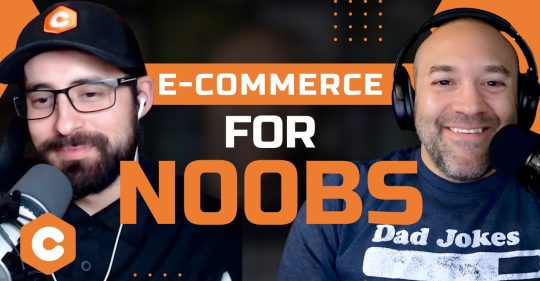
The goal isn't just to "spend money on ads"—it's to build a sustainable marketing system.
Think of your Meta ecommerce strategy much like your tabletop convention set-up.
At a booth you have to attract a stream of people who are interested, but not necessarily looking for your specific game or catalog of games. This is the exact same “mode” people who use Meta (Facebook/Instagram) are in.
What works well for your booth is a sure sign to work well in your ecommerce Meta advertising and vice versa!
Here are some tips to tap into this concept.
1. Translate Your "Convention Pitch"
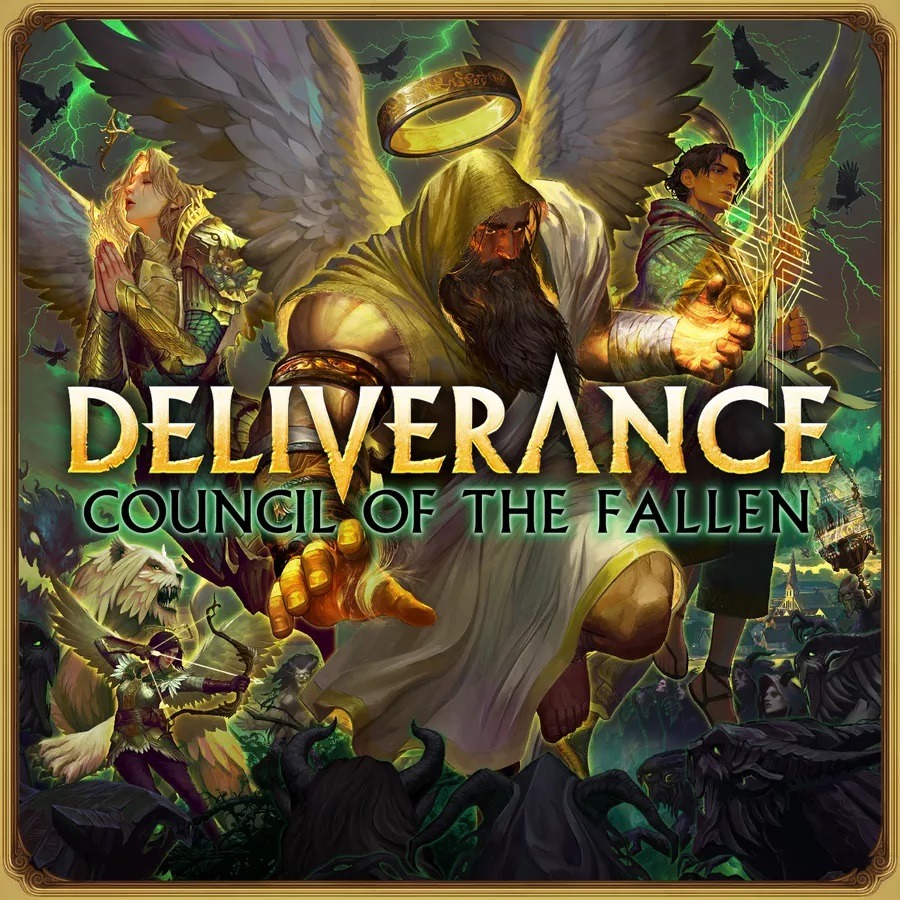
"Would you like to slay demons by the righteous power of God?" This is the convention pitch for our board game Deliverance (An angel vs demon dungeon crawler).
This hook is designed to build intrigue and generate a yes/no response.
We quickly want to partition the audience into groups of those who are interested in purchasing and those who will have no intention of ever doing so.
A statement so striking pulls people out of their "scrolling autopilot" and makes them situationally aware.
Think of your ad targeting as reaching the people in the convention hall and your ad messaging/imagery as the hook which draws them to your booth/store.
- Test your hooks: Take the 30-second pitch that works at your booth and turn it into your first ad. Try to communicate your unique selling point in 6 words.
- Visuals: Use imagery that creates intrigue and/or communicates your theme very clearly. People aren't on Meta to necessarily buy; they are there to be entertained.
2. Profitability Through Bundling
Selling a single $20 card game through Meta ads is often a losing battle. If it costs you $15–$20 in ad spend to acquire one customer, and your product is $20, your margins disappear after manufacturing and shipping.
To win, you must increase your Average Order Value (AOV) through bundling. We have found a sweet spot between the $40-$99 range.
| Strategy | Product | Add-ons | Total Value | Result |
| Single Sale | $20 Starter Deck | None | $20 | Likely Net Loss |
| The Bundle | $20 Starter Deck | $15 Playmat + $12 Coins | $47 | Profitable |
By offering an exclusive ad bundle, you make the same $20 ad spend return $50 or $80 instead of $20.
3. The Power Of Retargeting
Sometimes, the first sale isn't where you make your profit. A Loss Leader is a product sold at little to no profit to get a customer into your ecosystem (like an email list or Meta retargeting).
- Retargeting is where the profit lives: It might cost $20 to get a new person to buy, but it might only cost $2 to "retarget" an existing fan with a new expansion or another game from your catalog.
- Abandoned Carts: Set up automated ads for people who added the game to their cart but didn't finish. This is often the most profitable ad you will ever run. This is easily done on Shopify if the URL is [domain]/cart.

4. Adopt The Investment Mindset
E-commerce success rarely happens in the first 30 days. Think of your initial ad spend as "paying for data." You might lose $500 in Month 1 while you figure out which images people click on. In Month 2, you break even. By Month 3, you've optimized your funnel, and you're seeing a $3 return for every $1 spent. This isn't gambling; it's building a permanent revenue source for your publishing house.
5. Tracking: Understand Its Limits
Don't expect an immediate "1:1" tracking of every dollar.
Between the variance of privacy settings, browser compatibility, operating systems, URL sharing and the long sales cycle of tabletop games (sometimes 3+ weeks), tracking is a "dim mirror."
Compare your total gross revenue vs. total ad spend to see develop benchmarks and patterns which can assist you in making informed decisions with future ad spend.
We keep a weekly spreadsheet for all our clients' ecommerce accounts and review these numbers very closely. Understanding your medium weekly income will help you determine the profitability of your advertising and its overall impact.
Check out our Crowdfunding Nerds podcast on this topic for more industry insights!
For more awesome articles about marketing for crowdfunding, join our e-mail list!

Contact Us
Crowdfunding Nerds Episodes

3 Course Ultimate Bundle
67% Discount + Lifetime Updates!
Crowdfunding Nerds Articles
Copyright 2023 Crowdfunding Nerds. All Rights Reserved. By Next Level Web