A practical checklist for finding your crowd, showing up strong on launch day, and keeping backers informed after the campaign ends.
You’ve playtested the game. The art looks great. The prototype even survived game night with your most brutally honest friends. So… ready to launch?
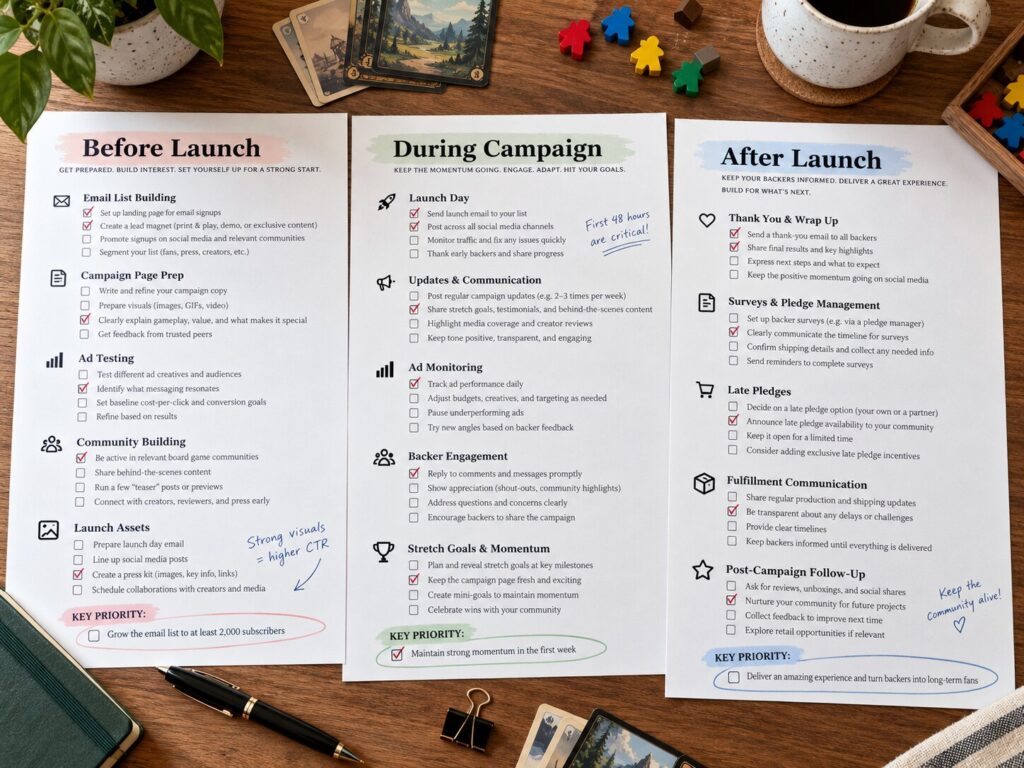
Not quite. A board game Kickstarter marketing checklist covers more than the big green launch button. You need a crowd before the campaign, a communication plan while it’s live, and a clear next step when the funding window closes.
We’ve broken the work into four stages so you can stop trying to hold your entire marketing strategy in your head. Check off what you’ve done, flag what needs attention, and keep moving. If you want a deeper plan for the months leading up to launch, start with our board game Kickstarter pre-launch marketing guide.
Why you need a launch-to-finish checklist
Kickstarter isn’t a magical audience dispenser. People have to discover your game, understand why they’ll love it, and trust you enough to back it. Then you have to keep communicating when their money—and your reputation—are on the line.
That’s the idea behind our Virtuous Cycle: reach likely fans, invite them into your community, and give them reasons to stay involved. Use the tasks below as a Kickstarter marketing checklist for board games, not as a promise that checking boxes guarantees funding.
Before launch: build demand before asking for pledges
Phase 1 · The months leading up to launch
This is where you earn attention instead of desperately chasing it. Don’t just count followers; look for people who know what your game is and genuinely want to play it.
Launch week is not the moment to invent a marketing workflow. It’s the dress rehearsal. Make the decisions now so launch morning doesn’t turn into a tabletop-themed fire drill.
During your Kickstarter campaign: keep earning attention
Phase 3 · From launch day to the funding deadline
Your campaign goes live. Excellent. Now don’t disappear into a cave to refresh the funding total every thirty seconds. Your job is to help interested players make a confident decision.
Nerd tip: Your campaign dashboard is information, not a high score. A spike in clicks means little if nobody understands the game or backs it.
After the campaign: keep your backers’ trust
Phase 4 · Once the funding window closes
Funding isn’t the end of your marketing story. Backers want to know what happens next, and today’s supporters could become tomorrow’s repeat customers—if you keep earning that trust.
If your crowdfunding plans include retail or a future expansion, those lessons become the foundation for your next launch. Marketing is easier when you don’t have to rebuild your audience from zero.
Your 10-minute launch readiness check
Before pressing the button, ask yourself five uncomfortable-but-useful questions:
Missed a box? That’s not failure. It’s useful information while you still have room to fix things. And if you’d like the how behind this Kickstarter launch checklist for board games, we’ve got you covered.
Got the checklist? Learn the playbook.
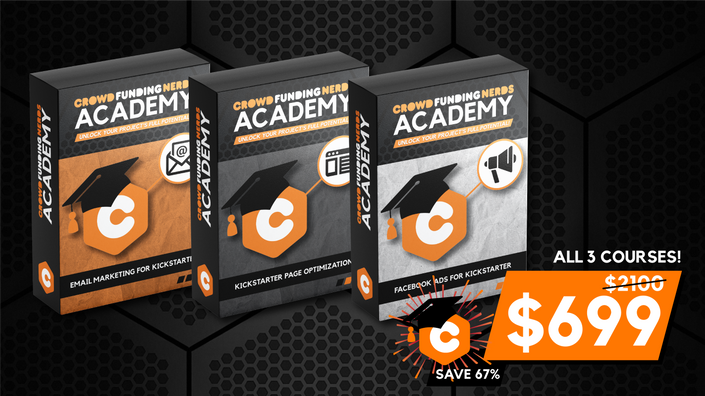
Our Kickstarter Essential Crash Course walks tabletop creators through the process behind these tasks: pre-launch audience building, email, organic and Meta ads, page readiness, launch-day execution, late pledges, and post-campaign marketing. It’s practical DIY training from the Crowdfunding Nerds—not a full-service agency bill.
When should I start marketing my board game Kickstarter?
Start as soon as you can show the game clearly and gather meaningful feedback. Ideally, give yourself months to find likely players, test your message, and build an engaged audience. Launch when both the game and the audience are ready, not simply when a calendar says so.
Do I need both an email list and Kickstarter followers?
They serve different purposes. Kickstarter followers can receive platform notifications, while a permission-based email list lets you share gameplay, answer objections, and remind people about the launch. When possible, build both and track engagement, not just totals.
Should I run Facebook and Instagram ads before launch?
Ads are optional. If your landing page works and you have a testing budget, small Meta ad experiments can help you reach likely players. Measure qualified email signups and subsequent engagement rather than clicks alone; do not scale a weak funnel.
What should I do on Kickstarter launch day?
Confirm the live link works, send the planned launch email to opted-in subscribers, publish scheduled posts, contact prepared partners, and monitor backer questions. Assign clear responsibilities and have backup plans for broken links or unexpected issues.
What marketing should continue after a Kickstarter campaign ends?
Thank backers, explain the next steps, share credible production and fulfillment updates, and address delays transparently. Where appropriate, consider late pledges and future product updates while respecting email permissions and platform rules.
Can I handle Kickstarter marketing without hiring an agency?
Yes, many creators can manage the essentials themselves if they have the time to learn and execute. A checklist keeps tasks visible; structured training can help you understand how to build a pre-launch audience, use ads carefully, run launch day, and communicate after the campaign.
Give your game a stronger shot at launch.
A checklist tells you what needs doing. The Kickstarter Essential Crash Course helps you put the pieces together—from finding your first fans to communicating with backers after funding. Learn the system, avoid expensive guesswork, and build a launch plan you can actually execute.
Learn how to market your Kickstarter from a year out, all the way through to your ecommerce ad campaign in this 11 hour course from the Crowdfunding Nerds!